

『Fuel Flow Meter Diesel Engines Sizing: Supply and Return Differential Balancing Loop Designs』Related information(v cone flow meter|rotary gas meter|gallon meter|gear meter|metal tube rotameter|glass tube rotameter|nutating disk meter|transit time ultrasonic flow meter|wedge flow meter|pd meters|hydraulic flow meter|ultrasonic water flow meter|water flow meter|air flow meter|magnetic water flow meter|oxygen flow meter|gas flow meter|argon flow meter|air velocity meter|gasoline flow meter|fuel flow meter|ultrasonic water meter|digital water meter|nitrogen flow meter|solid flow meter|Oxygen tank flow meter|digital water flow meter|diesel fuel flow meter|steam flow meter|02 flow meter|compressed air flow meter|oil flow meter|liquid flow meter)
Fuel Flow Meter Diesel Engines Sizing: Supply and Return Differential Balancing Loop Designs
Quick Answer: Size the supply meter for total diesel flow including injector return. Size the return meter for return flow only. Use a differential balancing loop when return pressure is low or unstable. For most generator and marine engine jobs, DN15 to DN25 oval gear meters cover 30 to 600 L/h. For engine test benches, use a Coriolis mass flow meter with 0.1 percent to 0.2 percent accuracy.
Diesel Engine Fuel Flow Has Two Lines
Here is the thing. Diesel engines return fuel even under full load. A common rail system may return 20 to 40 percent of the fuel delivered. The supply line carries fuel from the tank to the engine. The return line carries unused fuel back. If you measure only the supply line, the reading is too high. Actual fuel consumption is supply flow minus return flow.
We have seen this on many customer sites. A generator in Saudi Arabia showed 240 L/h on the supply meter while the engine burned only 175 L/h. The return line was not measured. That is a 37 percent error on fuel report data.
Why Supply and Return Differential Balancing Loop Design Matters
A differential balancing loop keeps the return line pressure stable and close to supply pressure. This stops vapor breakout and keeps the diesel in a single phase. Both meters then see the same fluid condition. This makes the net flow calculation repeatable.
In practice, an unbalanced return line may sit at 0.2 bar while the supply line is at 4 bar. Dissolved air releases. Bubbles pass through the return meter. The reading spikes. A back pressure regulator on the return line can hold the return pressure at 1 to 1.5 bar below supply. Add an air release valve before the return meter if the loop is long.
For engines over 600 kW, use a minimum DN20 return line. For engines below 300 kW, DN15 is usually enough. Keep total loop pressure drop under 0.5 bar at maximum flow. This includes the meter, strainer, regulator, and pipe losses.
Diesel Flow Meter Sizing From Engine Data
Do not select a flow meter from engine power alone. You need flow range. Use this field method. Net fuel flow in L/h equals engine power in kW times specific fuel consumption in g/kWh divided by diesel density in g/L. Diesel density is about 835 to 860 g/L at 15 degrees Celsius. Specific fuel consumption is about 200 to 230 g/kWh for modern engines.
Example: a 500 kW engine at 210 g/kWh burns about 105 kg/h. At a diesel density of 0.845 kg/L, that is 124 L/h. If return flow is 30 percent of supply flow, the supply meter sees about 177 L/h and the return meter sees about 53 L/h. Select a supply meter with a normal range of 30 to 300 L/h. A DN15 oval gear meter is a good fit. A DN20 meter also works if future load may increase.
Most engineers size the meter so normal flow sits between 30 and 80 percent of full scale. For positive displacement oval gear meters, accuracy falls below 10 percent of range. For Coriolis meters, accuracy holds at low flow. But pressure drop may limit how much flow a small Coriolis sensor can handle.
Recommended Meter Types for Diesel Engine Fuel Flow
We recommend two types from Silver Instruments. The first is an oval gear fuel flow meter. It fits diesel generator monitoring, marine fuel consumption, and pump skids. Choose DN15 or DN20 with pulse output. Accuracy is around 0.5 percent of reading. It handles diesel viscosity from 2 to 50 cP. Wetted parts can be aluminum or stainless steel. For a standby generator with a day tank, this is usually the lowest cost option that still gives reliable data.
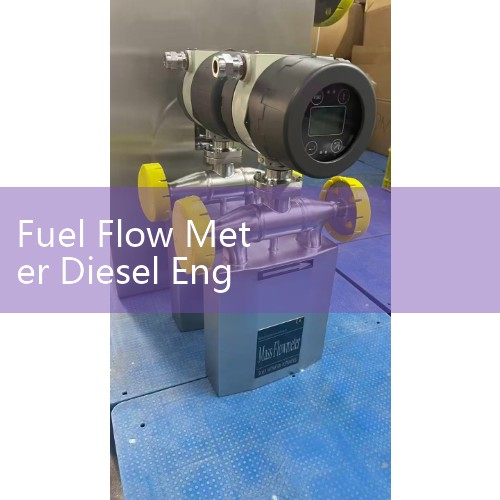
The second is a Coriolis mass flow meter. It measures mass flow directly. It also reports density and temperature. This is useful on engi
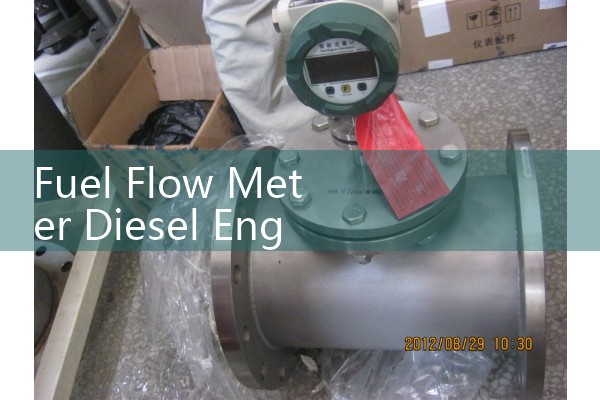
For engines below 100 kW, use a small oval gear meter with a 10 to 200 L/h range. For 300 to 800 kW engines, a DN15 or DN20 oval gear meter is common. For engines above 1000 kW or multi engine skids, use a DN25 oval gear meter or a Coriolis meter sized for 300 to 1200 L/h.
Installation Notes for Diesel Fuel Metering Loops
Install the supply meter after the primary fuel filter and before the engine lift pump. Install the return meter after the back pressure regulator. Keep both meters below the tank top level if possible. This keeps the lines full and reduces air pockets. Use a Y strainer before both meters. Diesel day tanks often contain scale and sediment.
Use 5 DN straight pipe upstream and 3 DN downstream for oval gear meters. For Coriolis meters, support the pipe on both sides to avoid sensor stress. On test benches, add a PT100 in the return line for temperature compensation. This is standard practice for repeatable fuel mass flow calculations.
If the generator is in a hazardous area, specify an ATEX or IECEx certified meter. We supply both oval gear and Coriolis diesel flow meters with Ex approval for Zone 1 and Zone 2.
Supply and Return Differential Balancing Loop Sizing Example
A customer in Vietnam needed fuel monitoring for a 700 kW marine diesel engine. Supply flow was 220 L/h. Return flow was 65 L/h. We supplied two DN15 oval gear meters with pulse output and a back pressure regulator set at 2.0 bar on the return line. The system now reads net fuel consumption within 1 percent. The return meter stays full because the regulator keeps back pressure above vapor pressure.
This is the kind of detail that separates repeatable fuel measurement from a display that drifts. If the return line pressure changes with tank level, the meter reading changes even if real fuel flow does not. A balancing loop fixes that.
FAQ: Diesel Engine Fuel Flow Meter Sizing
Can I use one flow meter on a diesel engine supply line?
Yes, but the reading will include return flow. Actual fuel consumption equals supply flow minus return flow. Use two meters or a differential loop for accurate data.
What size fuel flow meter for a 500 kW diesel generator?
Start with a DN15 or DN20 oval gear meter. If supply flow is around 180 L/h and return flow is around 50 L/h, a DN15 meter with a 30 to 300 L/h range works well.
Should I use Coriolis or oval gear for diesel fuel measurement?
For engine test benches, use Coriolis mass flow. For generator fuel monitoring, oval gear is usually enough. The choice depends on accuracy class, pressure drop, and budget.
Why does my return fuel flow meter reading jump?
The likely cause is air or vapor in the return line. Install a back pressure regulator and an air release valve. Keep the meter below tank level to stay full.
What data do you need for a diesel flow meter quote?
Send engine power in kW, supply flow range in L/h, return flow range in L/h, diesel pressure in bar, temperature in degrees Celsius, pipe size in DN, and hazardous area classification.
Contact Silver Automation Instruments for diesel engine fuel flow meter sizing and supply and return differential balancing loop designs. Tel: +86-25-68650347. WhatsApp: +86-25-52155837. WeChat: +86 15365082610. Website: flow-meter.com.au. We answer sizing questions from Singapore, Indonesia, Vietnam, Saudi Arabia, Nigeria, Chile, and other industrial markets.
 Hot Product
 Related AD