


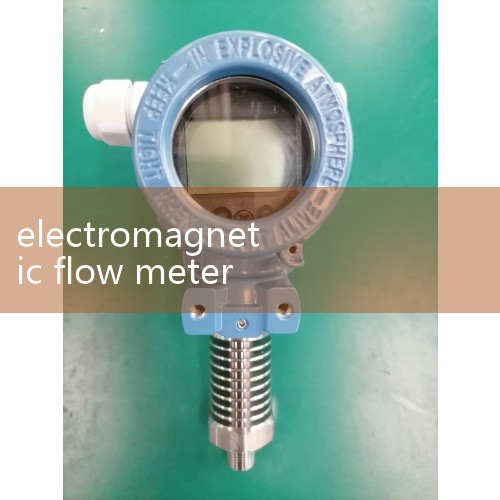

『electromagnetic flow meter principle|air flow meter』Related information(v cone flow meter|rotary gas meter|gallon meter|gear meter|metal tube rotameter|glass tube rotameter|nutating disk meter|transit time ultrasonic flow meter|wedge flow meter|pd meters|hydraulic flow meter|ultrasonic water flow meter|water flow meter|air flow meter|magnetic water flow meter|oxygen flow meter|gas flow meter|argon flow meter|air velocity meter|gasoline flow meter|fuel flow meter|ultrasonic water meter|digital water meter|nitrogen flow meter|solid flow meter|Oxygen tank flow meter|digital water flow meter|diesel fuel flow meter|steam flow meter|02 flow meter|compressed air flow meter|oil flow meter|liquid flow meter)

1. Collection | The simplest principle and usage guide of nuclear magnetic resonance spectrometer in history
Nuclear Magnetic Resonance (NMR) is a powerful tool in the field of material characterization, offering unparalleled insights into the components and structures of various organic and inorganic substances. It ranks alongside ultraviolet absorption spectroscopy, infrared absorption spectroscopy, and mass spectrometry as one of the “four spectrometers” in materials science. NMR is widely applied in physics, chemistry, biology, pharmacy, medicine, agriculture, environmental science, mining, materials science, and other disciplines. It is a highly effective means for qualitative analysis of organic and inorganic substances and can also be used for quantitative analysis.The principle behind NMR spectroscopy is based on the transition of atomic nuclei between energy levels. Only certain atomic nuclei placed in a strong magnetic field will experience energy level splitting. Resonance occurs when the absorbed radiation energy matches the energy difference between nuclear energy levels, generating a nuclear magnetic resonance signal.When a sample is illuminated with electromagnetic waves of a specific frequency, the atomic nuclei in certain chemical structures within the sample achieve resonance. The position and intensity of the signals obtained during the scanning process correspond to the local structure of the sample molecule (such as functional groups, molecular conformation, etc.), while the signal intensity often reflects the quantity of the relevant nuclei in the sample.NMR spectroscopy is renowned for its precision, accuracy, and ability to probe deep into materials without causing damage. Moreover,
_600x400.jpg)
 Hot Product
 Related AD