

『Endress Vortex Flow Meter Optimization: Improving Measurement Accuracy in Steam Lines』Related information(v cone flow meter|rotary gas meter|gallon meter|gear meter|metal tube rotameter|glass tube rotameter|nutating disk meter|transit time ultrasonic flow meter|wedge flow meter|pd meters|hydraulic flow meter|ultrasonic water flow meter|water flow meter|air flow meter|magnetic water flow meter|oxygen flow meter|gas flow meter|argon flow meter|air velocity meter|gasoline flow meter|fuel flow meter|ultrasonic water meter|digital water meter|nitrogen flow meter|solid flow meter|Oxygen tank flow meter|digital water flow meter|diesel fuel flow meter|steam flow meter|02 flow meter|compressed air flow meter|oil flow meter|liquid flow meter)
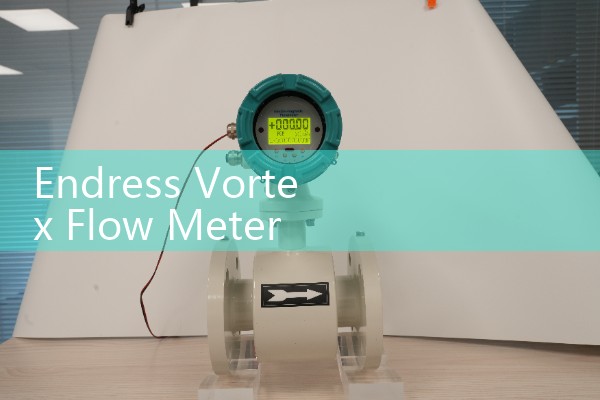
Endress Vortex Flow Meter Optimization: Improving Measurement Accuracy in Steam Lines
Quick Answer: Steam flow accuracy on an Endress vortex flow meter drops when density changes are ignored. Enable temperature and pressure compensation, set a realistic low flow cut off, and keep steam dry before the meter. Silver Instruments supplies inline vortex flow meters with the same compensation approach for saturated and superheated steam.
Why Steam Accuracy Drifts on Vortex Flow Meters
Volume flow is only half the equation. Steam density changes with pressure and temperature. A vortex flow meter measures velocity and calculates volume flow. If density stays fixed in the transmitter, the mass flow reading drifts. In practice, a saturated steam line at 6 bar can drop to 4 bar during low load. Steam density changes around 25 to 30 percent in that range. The volume flow still reads close to correct. The mass flow, however, becomes wrong by 10 to 15 percent because the transmitter uses a fixed density value. We see this error often on customer sites.
Enable Temperature and Pressure Compensation
Modern Endress vortex flow meters such as the Prowirl F 200 accept live pressure and temperature inputs. For saturated steam, you can use pressure compensation or temperature compensation alone. Saturated steam temperature and pressure have a fixed relationship. For superheated steam, you need both signals. A typical setup uses a 4 to 20 mA HART pressure transmitter ranged 0 to 10 bar and a PT100 Class A sensor downstream. Wire them to the flow transmitter and select steam type. The internal density calculation then updates every measurement cycle. We have seen this fix a 12 percent mass flow error on a steam header in a food plant in the Philippines. Before compensation, the boiler feedwater record did not match the steam meter. After the PT100 and pressure transmitter were connected, the mass flow total matched within 1.5 percent over a 24 hour period.
Silver Instruments SVF series vortex flow meters support the same setup. You can order the meter with an integrated pressure sensor and PT100 input. We configure it in the workshop for saturated steam or superheated steam before shipping.
Set the Low Flow Cut Off Properly
Low flow cut off is often ignored. A vortex meter produces unstable signals at very low steam velocity. If the cut off is too low, the transmitter counts false pulses and the totalizer runs high. If the cut off is too high, real flow gets lost. For steam, set the low flow cut off around 3 to 5 m/s equivalent velocity. On a DN80 line running saturated steam at 6 bar, that equals roughly 170 to 290 kg/h. Check the actual density and pipe size. Do not use a fixed 10 percent span value unless you know the minimum boiler load.
Damping also matters. For a boiler house steam header, set a damping time of 5 to 10 seconds. This smooths the output without hiding real load changes. For fast batch processes, keep damping shorter at 2 to 3 seconds.
Keep Steam Dry Before the Meter
Wet steam damages accuracy and the meter itself. Water droplets strike the bluff body and disturb vortex shedding. The meter may read high or become noisy. If steam dryness drops below 0.95, accuracy falls outside the normal specification. If the steam is wet enough to carry condensate, install a steam separator before the flow meter. Add a drain trap on the upstream pipe. For horizontal pipe runs, make sure the flow meter is not installed at a low point where condensate collects. We have seen a palm oil refinery in Indonesia run an Endress
Check Straight Pipe Run Before the Meter
Vortex meters need a stable velocity profile. Aim for 20D of straight pipe upstream and 5D downstream as a minimum. If you have a control valve, elbow, or pressure reducing valve upstream, increase the straight run to 30D. For a DN50 steam line, 20D means 1000 mm of straight pipe before the meter. This is rarely available in tight skids. In that case, use a flow conditioner or move the meter to a longer run. Do not trust the installation drawing alone. Walk the pipe run and check for two elbows in different planes. That creates swirl and shifts the K factor.
Match Meter Size to Real Steam Flow
Many steam meters are oversized. Pipe size and meter size are not always the same. If a DN100 steam line sees only 150 kg/h at 6 bar, the velocity is too low for a DN100 vortex meter. The meter runs below its stable range. In this case, use a DN50 or DN65 vortex meter with reducers. Check the velocity first. For saturated steam, keep normal velocity between 20 and 35 m/s. Do not exceed 50 m/s because erosion accelerates. For small boiler lines, DN15 to DN50 works. For process headers, DN80 to DN150 is common. Send us your minimum and maximum steam flow. We will size the meter and tell you the pressure drop.
Silver Instruments Replacement for Endress Vortex Meters
Some customers run older Endress Prowirl 72 or 73 meters and want a drop in replacement. We supply Silver Instruments SVF series vortex flow meters in wafer and flanged bodies. Give us the flange standard, face to face length, pipe size, and steam condition. We can often match the installation length without changing the pipe spool. The SVF series accepts 4 to 20 mA HART, RS485 Modbus, and pulse output. It also supports integrated pressure and temperature compensation. We factory configure the flow range and steam type based on your data. Last year, a dairy in New Zealand replaced a failing Endress Prowirl 72 on a DN65 saturated steam line. The pipe spool stayed in place. Installation took one shift.
FAQ
Why does my steam vortex meter read high at low load?
Because density compensation is missing or the low flow cut off is too low. At low load, wet steam and unstable vortex signals add false counts.
Do I need pressure and temperature compensation for saturated steam?
One signal is enough for saturated steam. Use pressure or temperature. For superheated steam, use both signals.
Can wet steam damage an Endress vortex flow meter?
Yes. Water droplets erode the bluff body over time. Install a steam separator and drain trap before the meter.
What straight pipe run does a vortex meter need?
Use 20D upstream and 5D downstream as a minimum. Increase to 30D upstream if a control valve or two elbows are close to the meter.
Can Silver Instruments replace an Endress vortex meter without pipe changes?
In many cases yes. Send us the flange standard, face to face length, pipe size, and steam condition. We will check the SVF series fit.
Contact Silver Automation Instruments
Tell us your steam pressure in bar, temperature in °C, pipe size in DN, and minimum to maximum flow in kg/h. We will recommend a compensated vortex flow meter or replacement for your existing Endress unit. Call us at +86-135-1213-1526, WhatsApp 86-135-12131526, or WeChat +86 13512131526.
 Hot Blog
 Related AD