

『Circuit Setter Flow Meter: Bell and Gossett Dynamic HVAC Balancing Tools』Related information(v cone flow meter|rotary gas meter|gallon meter|gear meter|metal tube rotameter|glass tube rotameter|nutating disk meter|transit time ultrasonic flow meter|wedge flow meter|pd meters|hydraulic flow meter|ultrasonic water flow meter|water flow meter|air flow meter|magnetic water flow meter|oxygen flow meter|gas flow meter|argon flow meter|air velocity meter|gasoline flow meter|fuel flow meter|ultrasonic water meter|digital water meter|nitrogen flow meter|solid flow meter|Oxygen tank flow meter|digital water flow meter|diesel fuel flow meter|steam flow meter|02 flow meter|compressed air flow meter|oil flow meter|liquid flow meter)
Circuit Setter Flow Meter: Bell and Gossett Dynamic HVAC Balancing Tools
Quick Answer: A Bell and Gossett Circuit Setter is a calibrated balancing valve with two pressure test ports. HVAC engineers use it to set water flow in closed chilled water and hot water loops. When a process line needs 4-20 mA HART output, chemical resistance, or sanitary connections, Silver Automation Instruments supplies inline electromagnetic, ultrasonic, and oval gear flow meters.
What Is a Bell and Gossett Circuit Setter Flow Meter
A Circuit Setter is not a turbine or electromagnetic flow meter. It is a brass or bronze balance valve with a machined venturi section. Two pressure taps on the valve body allow a technician to connect a differential pressure gauge. The gauge reads pressure drop in kPa or psi. The reading converts to flow rate in gallons per minute or liters per second using the valve flow coefficient. Most HVAC contractors know this as the Bell and Gossett Circuit Setter method.
Typical sizes run from DN15 to DN150. Working pressure is often 2400 kPa at 120 degrees Celsius for water. The valve body can be bronze or brass. Wetted parts include stainless steel ball and seat in some versions. B and G provides a flow chart for each valve size. This chart links pressure drop to flow. No battery. No analog output. No display.
How the Circuit Setter Balances a Hydronic Loop
In practice, a balancer installs the valve in series with the branch line. The balancer connects a portable manometer to the two test ports. Then the balancer opens or closes the valve stem until the pressure drop matches the design value. The flow is now balanced. Simple. Most balancing teams in Southeast Asia use this method for commissioning large hotel and office HVAC systems.
But there is a catch. The measurement only works when the pump is running and the loop is full. Air bubbles change the reading. Dirt can block the small pressure taps. A maintenance crew in Manila once replaced a Circuit Setter after the pressure ports clogged with black iron sludge. They then asked us for a magnetic flow meter with no internal moving parts and no small taps. That solved the repeat failure.
Where a Circuit Setter Flow Meter Works Well
This tool shines in closed HVAC loops. Chilled water systems. Hot water reheat coils. Fan coil units. Air handling units. Geothermal bore fields. It is low cost. It has no power wiring. A balancer can carry one differential gauge and balance twenty branch lines in a morning.
We see many HVAC consultants in Australia and the Middle East specify Circuit Setters at the final commissioning stage. It is a simple mechanical tool. No calibration certificate is required for standard projects. No annual recalibration in most cases because the valve is a fixed flow coefficient device.
Limitations for Industrial Process Lines
Here is the thing. A Circuit Setter does not send a signal to a PLC or BMS. It cannot log data. It cannot be used for billing or custody transfer. The bronze body fails fast with seawater, sodium hypochlorite, or acidic wastewater. The pressure ports block with sludge, pulp, or fat. In food plants, the threaded body does not meet sanitary clean in place rules. In oil and gas, it is not ATEX or IECEx certified for Zone 1 or Zone 2.
Most engineers skip this part until commissioning day. Then they find a valve that cannot measure flow under the actual site conditions. Last year a customer in Vietnam asked us for a flow meter for a district cooling line. They had a Circuit Setter but the control room needed a live f
Silver Instruments Flow Meter Options for HVAC and Process Water
Silver Automation Instruments supplies industrial flow meters for cooling water, boiler feed, makeup water, heat pump loops, and chemical dosing. We are based in Nanjing and ship to Southeast Asia, Oceania, Latin America, the Middle East, and Africa.
For closed HVAC water lines from DN15 to DN300, we recommend the Silver Instruments EMAG series electromagnetic flow meter. Accuracy is plus or minus 0.5 percent of reading. You can choose PTFE or hard rubber liner. Output options include 4-20 mA HART, pulse, and RS485 Modbus. The meter works with water that has conductivity above 5 microsiemens per centimeter. Typical chilled water is 200 to 800 microsiemens per centimeter. So this is not a problem.
For glycol loops above 40 percent brine, or for non conductive fluids, we recommend a clamp on ultrasonic flow meter. No pipe cutting. No pressure drop. It reads flow from outside the pipe wall. For diesel, grease, or viscous fluids, see our oval gear flow meter product line. It handles 0.3 to 2000 cP with excellent repeatability.
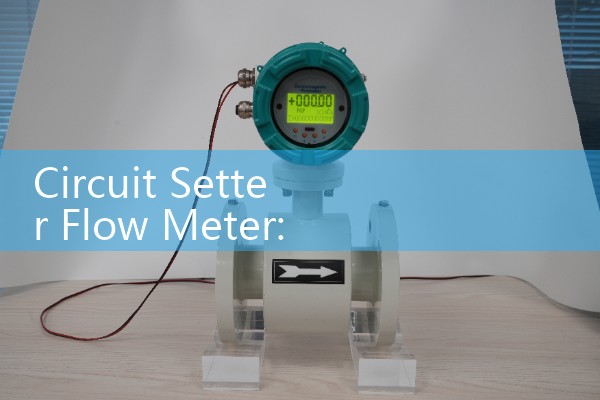
For batch dosing or mass flow in kg/h, our Coriolis mass flow meter gives direct mass output and density reading. It suits chemicals, palm oil, and liquefied gas.
Model Selection and Quote Data
We recommend a model based on four data points. Pipe diameter, fluid type, temperature, and flow range. Send us these values with your working pressure. We will reply within 24 hours with a budget price and a data sheet. Tell us if you need ATEX, IP68, or a local language manual. Our team supports English, Spanish, Arabic, and Portuguese.
Contact Silver Automation Instruments today. Tel: +86-135-1213-1526. Whatsapp: 86-135-12131526. WeChat: +86 13512131526. Or visit flow-meter.com.au to see the full range.
FAQ: Circuit Setter Flow Meter and Industrial Alternatives
1. Is a Circuit Setter a flow meter or a balancing valve?
A Circuit Setter is a balancing valve with a built in flow measurement method. It uses a differential pressure gauge connected to two test ports. It is not a continuous flow transmitter.
2. Can a Bell and Gossett Circuit Setter measure seawater or wastewater?
Not recommended. The bronze body and small pressure ports corrode or clog in these fluids. Use an electromagnetic flow meter with PTFE or EPDM liner for seawater. Use an open channel ultrasonic meter for raw wastewater.
3. What accuracy can I expect from a Circuit Setter flow meter?
In a clean HVAC water loop, a trained balancer can achieve plus or minus 5 percent of actual flow. Under dirty or partially clogged port conditions, accuracy drops quickly. An industrial electromagnetic flow meter gives repeatable accuracy of plus or minus 0.5 percent of reading.
4. Does Silver Automation Instruments sell Bell and Gossett Circuit Setter valves?
No. We do not sell B and G valves. We supply inline and clamp on flow meters for HVAC, water, chemical, food, and oil and gas service where a Circuit Setter is not enough.
5. Which flow meter should replace a Circuit Setter in an industrial HVAC line?
For conductive water and chilled water, use the Silver Instruments EMAG series electromagnetic flow meter. For glycol above 40 percent or for a pipe you cannot cut, use a clamp on ultrasonic flow meter. Send your pipe diameter and flow range to get a specific recommendation.
 Hot Blog
 Related AD