

『Ingress Resistant Flow Meter: IP68 Submersible Enclosures for Underground Municipal Water Mainlines』Related information(v cone flow meter|rotary gas meter|gallon meter|gear meter|metal tube rotameter|glass tube rotameter|nutating disk meter|transit time ultrasonic flow meter|wedge flow meter|pd meters|hydraulic flow meter|ultrasonic water flow meter|water flow meter|air flow meter|magnetic water flow meter|oxygen flow meter|gas flow meter|argon flow meter|air velocity meter|gasoline flow meter|fuel flow meter|ultrasonic water meter|digital water meter|nitrogen flow meter|solid flow meter|Oxygen tank flow meter|digital water flow meter|diesel fuel flow meter|steam flow meter|02 flow meter|compressed air flow meter|oil flow meter|liquid flow meter)
Ingress Resistant Flow Meter: IP68 Submersible Enclosures for Underground Municipal Water Mainlines
Quick Answer
For underground municipal water mainlines, choose an electromagnetic flow meter with a remote IP68 sensor and a converter installed above the flood line. Silver Automation Instruments supplies submersible magmeters with PTFE or hard rubber liners, 4-20 mA HART, pulse, and RS485 Modbus outputs. Send pipe size DN, pressure bar, temperature °C, and flow range for a budget quote.
Why IP68 Ingress Protection Matters in Underground Water Mainlines
Here is the thing. A flow meter in a below grade concrete vault is not the same as a meter in a plant room. The vault floods. Condensation forms on every cold surface. The air stays wet all year. Standard enclosures fail in that setting.
IP68 means the sensor housing is dust tight and rated for continuous immersion at a depth stated by the manufacturer. In specs from North American EPCs this is often written as NEMA 6P. For water distribution networks, we suggest continuous submersion ratings of 1.5 m to 3 m for the sensor body. Most engineers skip this part and later find corroded terminal blocks that were never sealed.
An ingress resistant flow meter for underground municipal water mainlines must have more than a high IP rating on paper. It needs sealed cable entries, a heavy wall body, and a remote converter that stays dry and accessible.
Electromagnetic Flow Meter Selection for Municipal Mainlines
For raw water, potable water, and reclaimed water, full bore electromagnetic flow meters are the standard choice. They have no moving parts and no pressure drop. They handle low conductivity water when sized correctly. Silver Instruments offers DN15 to DN2000 with compact or remote mounting. The remote version keeps the converter above ground while the sensor sits in the submerged vault.
We have seen this on customer sites many times. A utility in the Philippines installed a compact meter inside a drain pit. The display worked for two months. Then a heavy monsoon filled the chamber. The meter body survived but the converter did not. After that, the utility moved to remote IP68 sensors and did not lose another unit.
In practice, a vault floods more often than design drawings suggest. If the converter is not above the high water mark, the risk is not worth the lower installation cost.
Enclosure and Liner Choices for Long Service Life
The wet side materials matter as much as the ingress rating. For drinking water, choose PTFE or hard rubber liners. Electrodes can be 316L stainless steel, Hastelloy C, or titanium depending on chlorine residual and pH. For raw water with sand, a hard rubber liner often outlasts PTFE because the rubber absorbs particle impact better.
Cable entries on submersible flow meters need double compression glands and polyurethane sheathed cables. We use continuous lengths up to 20 m or 30 m where possible. That removes junction boxes inside the flooded vault. The signal cable carries electrode voltage and coil current, so a buried splice is a common failure point. We do not recommend it.
Ask if your project requires NSF/ANSI 61 or equivalent potable water certification. We confirm liner and electrode options against local drinking water standards before quoting.
Output and Integration for SCAD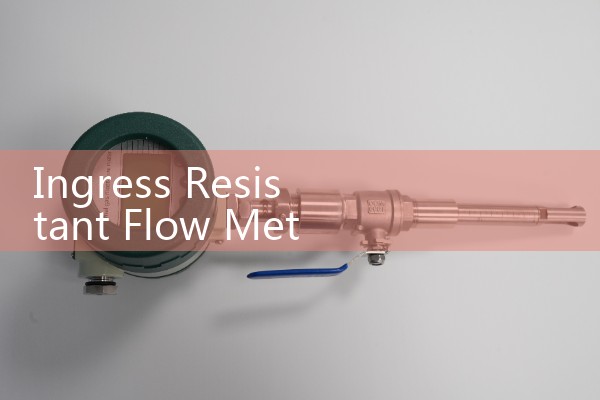
Utilities need more than a local totalizer. A mainline meter should output 4-20 mA HART for flow rate, pulse for volume total, and RS485 Modbus RTU for SCADA or telemetry. Some projects need battery power for remote locations. Silver Instruments supports all three outputs on the remote converter. The converter can be wall mounted, panel mounted, or fitted to a pole above grade.
Because the converter is the accessible part, it carries the display and keypad. The submersible sensor only contains the coils and electrodes. The split reduces repair time. If a sensor fails, the utility does not need to recalibrate the converter on site. Most maintenance teams prefer this arrangement.
Grounding and Power in Wet Vaults
Poor grounding causes unstable readings on electromagnetic flow meters. In poured concrete vaults with rebar and standing water, ground loops are common. The sensor body must bond to the pipe and to a clean earth rod. Silver Instruments includes grounding rings or ground electrodes where the pipe lining is nonconductive.
Power for the remote converter should come from a clean instrument supply. Do not share the circuit with large pumps or variable frequency drives without isolation. If the site has frequent lightning, specify surge protection on the signal and power terminals.
Five Questions Engineers Ask Before Buying
Q: Can an IP68 flow meter work continuously under a flooded road vault?
A: Yes, if the manufacturer confirms the immersion depth and the cable entry design. At Silver Instruments, the remote sensor can be rated for continuous immersion. Tell us the expected flood depth so we match the cable gland and housing pressure test.
Q: What is the difference between IP67 and IP68 for a mainline meter?
A: IP67 often covers temporary immersion up to 1 m for 30 minutes. IP68 means the equipment can handle continuous immersion at a depth stated by the maker. For underground chambers that stay flooded for days, IP68 is the safer choice.
Q: Which liner should I choose for potable water?
A: Hard rubber and PTFE both work. Hard rubber is economical for most municipal water. PTFE is preferred for high temperature or aggressive cleaning. Electrode selection depends on chlorine residual and pH.
Q: Can the converter be installed far from the sensor?
A: Yes. Standard signal cable can be 10 m to 30 m. For longer runs, we can supply custom lengths with thicker conductors. The maximum distance depends on cable capacitance and the converter design.
Q: What information do you need for a quote?
A: Send pipe size in DN, pressure in bar, water temperature in °C, flow range, and the required output signal. Tell us the flood depth if the meter will sit in a vault.
Get a Quote from Silver Automation Instruments
We supply ingress resistant flow meters for water utilities, desalination plants, pump stations, and irrigation districts in Southeast Asia, the Middle East, Latin America, Africa, and Oceania.
Tell us your pipe size DN, pressure bar, temperature °C, and flow range. Contact Silver Automation Instruments at Tel +86-25-68650347, WhatsApp +86-25-52155837, WeChat +86 15365082610. Review the IP68 electromagnetic flow meter range at flow-meter.com.au.
 Hot Blog
 Related AD