

 Current position > News detail
『Doppler Water Flow Meter: Heavy Solids Effluent and Wastewater Monitoring Probes』Related information(v cone flow meter|rotary gas meter|gallon meter|gear meter|metal tube rotameter|glass tube rotameter|nutating disk meter|transit time ultrasonic flow meter|wedge flow meter|pd meters|hydraulic flow meter|ultrasonic water flow meter|water flow meter|air flow meter|magnetic water flow meter|oxygen flow meter|gas flow meter|argon flow meter|air velocity meter|gasoline flow meter|fuel flow meter|ultrasonic water meter|digital water meter|nitrogen flow meter|solid flow meter|Oxygen tank flow meter|digital water flow meter|diesel fuel flow meter|steam flow meter|02 flow meter|compressed air flow meter|oil flow meter|liquid flow meter)
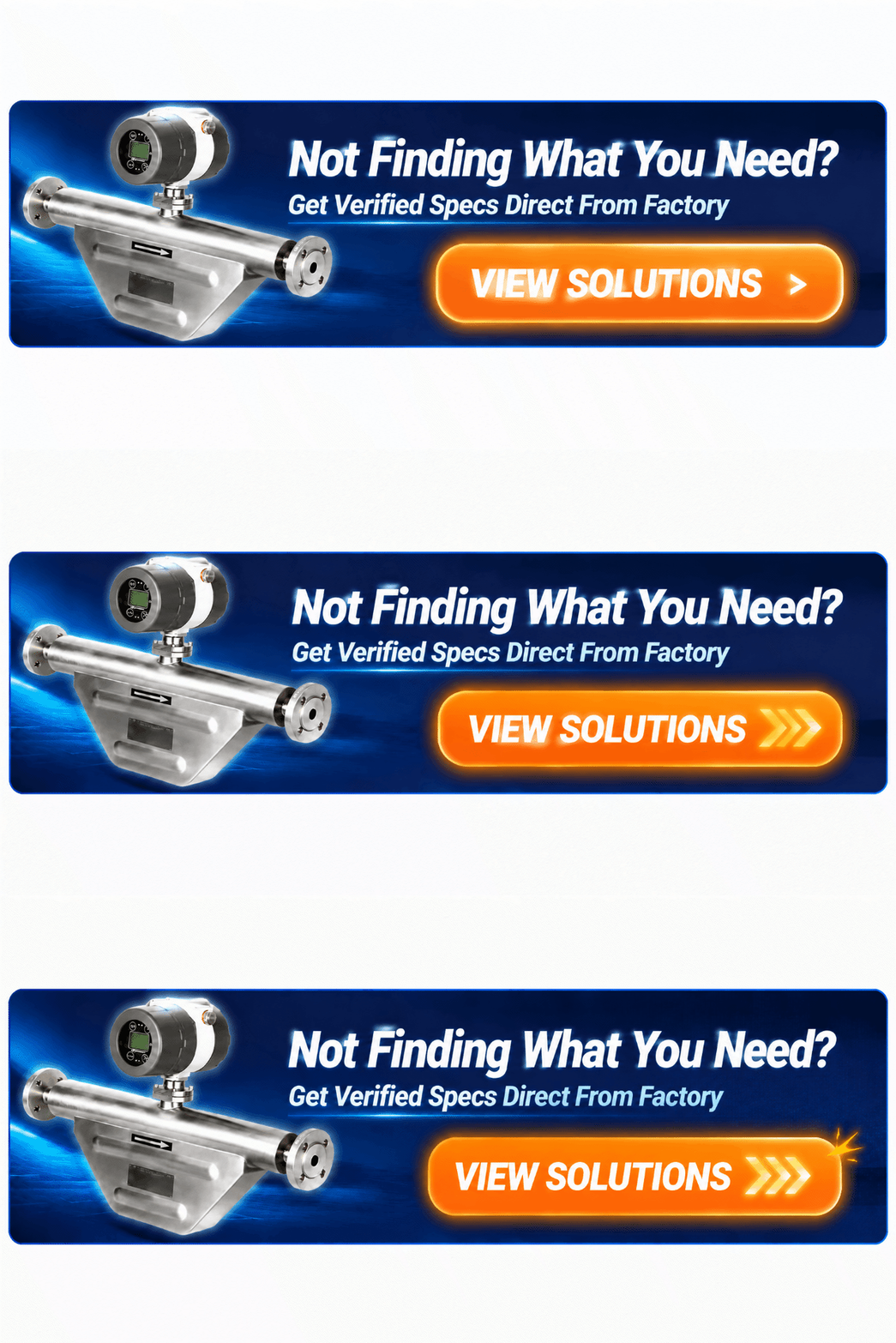
Doppler Water Flow Meter for Heavy Solids Effluent and Wastewater Monitoring Probes
Quick Answer: A Doppler flow meter measures effluent, sludge, and wastewater with heavy solids because it uses reflected sound from particles or air bubbles. It works well in raw sewage, sludge return lines, and industrial effluent. Silver Automation Instruments supplies clamp-on and insertion Doppler flow meters with 4-20 mA, pulse, and RS485 Modbus outputs for plants in Southeast Asia, Africa, Latin America, and the Middle East.
Why Doppler Meters Work for Heavy Solids Wastewater
Doppler flow meters do not need clean liquid. They send an acoustic signal into the flow. Particles, fibers, or gas bubbles reflect the signal back. The meter measures the frequency shift and converts it to flow velocity. The principle works well in wastewater with suspended solids at 200 mg/L or higher. In clear water or pure oil the signal can be weak.
We have seen this on customer sites many times. A magnetic flow meter may struggle with thick sludge or coating. A Doppler probe keeps reading because the acoustic window stays in contact with the moving particles. For heavy solids effluent and wastewater monitoring probes, this technology is practical in rough process conditions.
But do not expect laboratory accuracy. Expect repeatable flow data from a meter that survives real plant conditions. Most engineers choose Doppler for reliability and low maintenance on problem lines.
Typical Applications and Pipe Locations
Common installations include sludge return lines, raw sewage lift stations, food processing effluent, paper mill white water, dredge slurry, and mining tailings. A single clamp-on Doppler flow meter can measure flow from outside a pipe. For buried lines or concrete pipes, an insertion probe is usually a better fit.
In one project in Vietnam, a starch processor installed a Silver Instruments Doppler meter on a DN150 HDPE sludge return line. The line carried about 4 percent solids. The meter sent a 4-20 mA signal to the plant PLC. The maintenance team used the totalizer reading every shift to adjust the return sludge pump.
Another site in the Philippines used an insertion probe on a DN300 carbon steel effluent line from a poultry processing plant. Grease and solids built up on the pipe wall. The probe still produced stable readings because it was positioned in the middle of the flow stream.
Probe and Sensor Selection for Effluent Lines
Silver Instruments offers two main configurations. A clamp-on sensor mounts outside the pipe. An insertion probe goes through a ball valve or a saddle fitting. The clamp-on version works best on carbon steel, stainless steel, cast iron, PVC, and HDPE pipes from DN25 to DN3000. The insertion version works on large pipes and open channels where access is available.
Standard probes handle process temperatures from 0 to 80 °C. A high temperature version is available for 0 to 150 °C. The acoustic window material is 316 stainless steel or ceramic for abrasive sludge. The probe body can be made from 316 stainless steel for corrosion resistance in salt water or chemical effluent.
For heavy solids, specify the insertion probe with a ceramic window. This option resists sand, grit, and metal fines. The solids concentration can be from 100 mg/L to more than 50000 mg/L. In very thick sludge, install the probe in a vertical pipe or a pipe with enough slope to avoid sediment collection around the sensor.
Output Signals and System
Most Silver Instruments Doppler flow meters are shipped with 4-20 mA output and RS485 Modbus RTU. Pulse output is optional for totalizing. HART is available for plants that need remote configuration. The 4-20 mA signal connects directly to a PLC, SCADA, or a paperless recorder.
We recommend using a Silver Instruments flow totalizer or paperless recorder when the meter is installed far from the control room. The recorder logs flow rate and total flow. You can export the data via USB or Ethernet. This setup helps plant engineers prove discharge volumes to local water authorities.
Field Experience and Common Pitfalls
Here is the thing. A Doppler flow meter is not ideal for laminar flow or very clean water. It needs particles or bubbles. If your effluent has less than 100 mg/L of solids, you may need an electromagnetic flow meter or another technology.
Pipe scale and air pockets cause errors. Mount the sensor away from pump suction and discharge. Do not install the sensor at the top of a horizontal pipe. Air bubbles collect there. Install on the side or bottom if the pipe runs full. For gravity lines, make sure the pipe is full at the measurement point. Partial fill causes underreading.
Most engineers skip this part and then wonder why readings drift. In practice, a straight run of 10 pipe diameters upstream and 5 pipe diameters downstream is enough for most wastewater lines. If you have an elbow or a valve nearby, add more straight run. The meter can still work, but repeatability may drop.
Recommended Ordering Information
To get a price from Silver Automation Instruments, send us your pressure in bar, temperature in °C, pipe size in DN, and flow range. Also tell us the solids type and approximate solids content. For insertion probes, state the pipe wall thickness and connection size. We will recommend a clamp-on or insertion Doppler flow meter with the correct probe material and output options.
You can reach us by phone at +86-135-1213-1526 or by WhatsApp at 86-135-12131526. WeChat is +86 13512131526. You can also send your project details through the contact form on flow-meter.com.au.
FAQ: Doppler Flow Meter for Heavy Solids Effluent and Wastewater
1. Can a Doppler flow meter measure heavy solids effluent?
Yes. It works best when the effluent contains at least 100 mg/L of suspended solids or air bubbles. Heavy solids such as sludge, paper stock, or dredge slurry produce strong reflected signals.
2. What is the minimum solids concentration for a Doppler flow meter?
The practical minimum is around 100 mg/L. Below that level the signal may be too weak. For clear water, use an electromagnetic or ultrasonic transit time flow meter instead.
3. Does the probe work on both metal and plastic pipes?
Yes. The clamp-on version works on carbon steel, stainless steel, cast iron, PVC, and HDPE. Pipe wall condition matters. Heavy scale or internal coating can reduce signal strength.
4. What outputs can I get from this wastewater flow meter?
Standard output is 4-20 mA and RS485 Modbus RTU. Pulse output and HART are optional. The 4-20 mA signal connects to PLC and SCADA systems.
5. How do I order a replacement probe or a complete meter?
Email or WhatsApp Silver Instruments with your existing model number, pipe size, process temperature, and solids type. We will match the probe frequency and cable length. Delivery time is usually 5 to 10 working days for standard models.