

 Current position > News detail
『Flow Meter Calibration Formula Setup: Calculating Pulses Per Liter and Error Percentages』Related information(v cone flow meter|rotary gas meter|gallon meter|gear meter|metal tube rotameter|glass tube rotameter|nutating disk meter|transit time ultrasonic flow meter|wedge flow meter|pd meters|hydraulic flow meter|ultrasonic water flow meter|water flow meter|air flow meter|magnetic water flow meter|oxygen flow meter|gas flow meter|argon flow meter|air velocity meter|gasoline flow meter|fuel flow meter|ultrasonic water meter|digital water meter|nitrogen flow meter|solid flow meter|Oxygen tank flow meter|digital water flow meter|diesel fuel flow meter|steam flow meter|02 flow meter|compressed air flow meter|oil flow meter|liquid flow meter)
Flow Meter Calibration Formula Setup: Calculating Pulses Per Liter and Error Percentages
Quick Answer: Calculate pulses per liter by dividing total pulse count by total volume passed. Calculate error percentage by comparing the meter volume to a known reference volume and multiplying the difference by 100. Most field calibration errors come from unit conversion mistakes or a proving volume that is too small.
Silver Automation Instruments supplies flow meters to water plants, chemical sites, food factories and oil and gas terminals. Engineers in Southeast Asia and the Middle East often ask us for a simple K-factor setup guide before they install a magnetic flow meter or an oval gear flow meter. The math is direct. The field steps require care with unit conversion and reference volume.
1. Pulse Per Liter Formula for Basic Calibration
Pulses per liter is often called the K-factor. The base formula is total pulses divided by total liters. For example if a turbine flow meter sends 23,850 pulses during a 25 liter fill, the pulses per liter value is 954. The formula is:
pulses per liter = total pulses / total liters
Many plants receive a K-factor in pulses per cubic meter. Check the unit before you enter the value in a PLC or a flow totalizer. A K-factor of 95.4 pulses per liter is 95,400 pulses per cubic meter. This conversion is simple but we see many setup errors at this point.
2. Field Calibration Setup Steps
Field calibration can be done with a master meter, a weigh scale or a calibrated reference vessel. For water the most practical setup is a reference tank. For diesel or edible oil an oval gear flow meter is often proved with a weigh scale. For gas or steam thermal mass flow meters are normally calibrated against a reference meter in a controlled lab.
Before you start, zero the totalizer. Run a stable flow rate. Avoid starting and stopping too early. Let the meter reach normal flow. After the run record the meter volume and the reference volume. For a reliable result use a flow volume that gives at least 1000 pulses. A small volume with only 50 or 80 pulses can produce poor repeatability.
3. Error Percentage Calculation During Proving
The error percentage formula is:
error percent = ((meter volume - reference volume) / reference volume) x 100
If the reference tank shows 100.0 liters and the meter totalizer shows 101.2 liters, the error is 1.2 percent. A positive value means the meter over-registers. A negative value means the meter under-registers.
Use this formula if the flow meter accepts a new K-factor. New K-factor = current K-factor x (meter volume / reference volume). With a current K-factor of 1000 pulses per liter and a meter volume of 101.2 liters against 100.0 reference liters, the new K-factor becomes 1012 pulses per liter. After the change, run a second proving cycle to confirm the error is below your acceptance limit.
4. Common Calibration Mistakes We See
One customer in Vietnam tested an oval gear flow meter for diesel with a 20-liter container. The short run produced a pulse count below 100 and the repeatability looked unstable. After switching to a 200-liter drum and a longer fill, the error calculation dropped to 0.4 percent. This is common in small workshops.
Another case invo
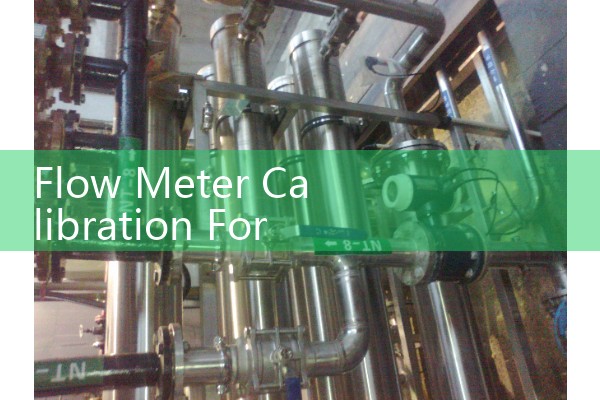
Other mistakes include mixing liters and US gallons, entering a pulse unit as a rate unit, and forgetting to adjust the K-factor after a change in meter size. A DN25 meter and a DN50 meter from the same series can have different K-factors because the internal geometry is different.
5. Recommended Flow Meter Types for Calibration
For low flow and high viscosity liquids, an oval gear flow meter gives a direct pulse output. These meters work well for diesel, palm oil, molasses and chemical dosing. For water and wastewater, magnetic flow meters provide stable readings without moving parts. For high temperature gases, a thermal mass flow meter with 4-20 mA HART is easier to configure in a DCS.
Silver Instruments can preconfigure the pulse per liter value before shipping. Tell us your flow range, pipe size in DN, fluid type, temperature in °C and pressure in bar. We also need your output type: pulse, 4-20 mA, RS485 or HART. This reduces startup time on site.
FAQ
Q: How do I convert K-factor from pulses per liter to pulses per cubic meter?
A: Multiply the pulses per liter value by 1000. If the meter outputs 95.4 pulses per liter, the value is 95,400 pulses per cubic meter. Always check whether your PLC uses liters, gallons or cubic meters because a mismatch can create a large error.
Q: What is a good error percentage for a flow meter calibration?
A: It depends on the meter type and the application. For an oval gear flow meter on diesel, plus or minus 0.5 percent is often acceptable. For a magmeter on cooling water, plus or minus 0.5 to 1.0 percent is common. For a thermal mass flow meter on compressed air, plus or minus 1.0 to 2.0 percent may be acceptable depending on installation conditions.
Q: Can I calibrate a flow meter with water if the meter will be used for oil?
A: In many cases yes, but verify with the manufacturer. An oval gear meter has a K-factor that changes with viscosity. A calibration with water may not represent the performance with heavy oil. We can supply viscosity correction data for high viscosity liquids.
Q: How many pulses do I need for a stable K-factor calculation?
A: In practice use at least 1000 pulses per proving run. More pulses reduce the effect of start and stop errors. If the flow meter frequency is low, use a larger volume or a longer run time.
Q: Does Silver Instruments calibrate flow meters before shipping?
A: Yes. We can provide a calibration certificate with traceability data for Coriolis mass flow meters, magnetic flow meters, oval gear flow meters and thermal mass flow meters. Tell us the fluid, viscosity, density, flow range and pipe size. We can also preload the K-factor into the transmitter.
Contact Silver Automation Instruments for flow meter calibration support. Send us your pressure in bar, temperature in °C, pipe size in DN and flow range in kg/h or L/h. Tel: +86-25-68650347. WhatsApp: +86-25-52155837. WeChat: +86 15365082610. Website: flow-meter.com.au