


 Current position > News detail
『Flow Meter for Air Flow Measurement in HVAC: Vane Anemometers vs Pitot Tube Systems』Related information(v cone flow meter|rotary gas meter|gallon meter|gear meter|metal tube rotameter|glass tube rotameter|nutating disk meter|transit time ultrasonic flow meter|wedge flow meter|pd meters|hydraulic flow meter|ultrasonic water flow meter|water flow meter|air flow meter|magnetic water flow meter|oxygen flow meter|gas flow meter|argon flow meter|air velocity meter|gasoline flow meter|fuel flow meter|ultrasonic water meter|digital water meter|nitrogen flow meter|solid flow meter|Oxygen tank flow meter|digital water flow meter|diesel fuel flow meter|steam flow meter|02 flow meter|compressed air flow meter|oil flow meter|liquid flow meter)

Flow Meter for Air Flow Measurement in HVAC: Vane Anemometers vs Pitot Tube Systems
Quick Answer: A vane anemometer is a portable tool for fast HVAC air flow spot checks at diffusers, grilles and filter faces. A Pitot tube system with a differential pressure transmitter gives a more repeatable average velocity reading in straight duct runs. If you need continuous air flow measurement with a 4-20 mA HART signal for a building management system, a thermal mass flow meter from Silver Instruments is often the better industrial choice.
Many HVAC technicians use vane anemometers because the tool is light and simple. You hold the probe in the air stream and read a direct velocity value on the display. A typical vane anemometer has a probe diameter of 60 mm to 100 mm. That means it covers a small area. In a large duct of DN 300 or DN 400, one reading is often not enough. You must traverse the duct face and average several points.
Vane anemometers work well in the range of 0.5 m/s to 20 m/s. Accuracy is usually around ±2 percent of reading plus 0.2 m/s. Because the bearing can wear out, regular calibration matters. In dusty HVAC return air, the vane bearing may become sticky. A customer in Vietnam asked us last year about unstable readings on a vane probe used in a textile plant. The issue was lint build up on the bearing. After cleaning, the readings returned to normal. That is a typical field problem.
Pitot Tube Systems in HVAC Air Flow Measurement
Pitot tube systems use a small tube inserted into the duct. The tube senses total pressure and static pressure. A differential pressure transmitter converts the pressure difference into a velocity signal. The velocity formula includes the air density. You need the duct static pressure and air temperature to correct for density. Most HVAC air density corrections are small, but at high altitudes or high temperatures the difference is real.
A Pitot tube works well in clean air with duct velocity from 3 m/s to 30 m/s. Below 2 m/s, the differential pressure becomes very small, often less than 2 Pa. That is hard to measure with a standard DP transmitter. Most engineers skip this part, but low velocity means large errors. A Pitot tube system also needs a straight duct run. The usual requirement is 10 diameters upstream and 5 diameters downstream. In a real plant, that straight run may not exist after a fan, elbow or damper. Then the velocity profile is not stable. You need to traverse the duct at 6 to 20 points depending on the duct shape. For a round duct, the log linear method with 6 or 10 points is common.
Pitot tubes are simple and cheap. The probe has no moving parts. The accuracy of the whole system depends on the DP transmitter. A DP transmitter with a range of 0 to 100 Pa or 0 to 250 Pa works best for HVAC air flow. But the same transmitter may drift at such low ranges. Companies in the Middle East with high dust loadings often see blocked Pitot tube holes. Compressed air purging helps, but that adds maintenance.
Key Differences and Field Decisions
Here is the thing. A vane anemometer is a handheld spot check device. A Pitot tube system can be a permanent or semi permanent measurement loop. If you only need commissioning data, a vane anemometer is easier. If you need to control a VAV box or monitor air flow for ventilation compliance, a Pitot tube system gives a continuous electrical signal. But the Pitot tube system is not always accurate at low flows or in dirty air streams.
For a duct of DN 100 or smaller, inserting a Pitot tube can distort the flow. A thermal mass flow meter with an insertion probe is often better. Thermal mass flow meters measure mass flow directly, not velocity. They work well from 0.5 m/s to 100 m/s and can
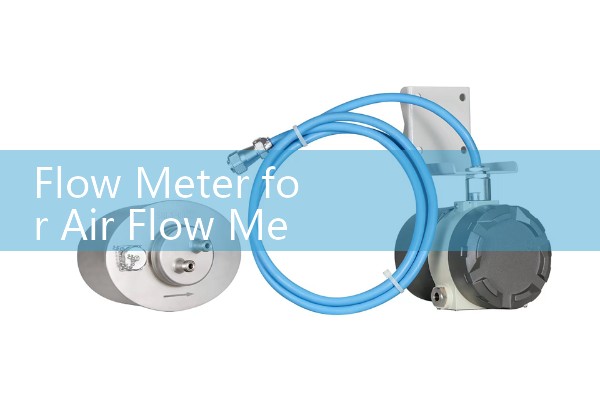
In HVAC air flow measurement, selection depends on duct size, straight run length, dust level, temperature and required output. A vane anemometer is manual and portable. A Pitot tube system is good for clean air after a straight run. A thermal mass flow meter is better for continuous air flow measurement in tight spaces or dirty air. So think about what the data will do. If the data goes to a building management system, you need an analog or digital signal.
Recommended Flow Meter Options
Silver Automation Instruments does not sell handheld vane anemometers or standalone Pitot tubes. We focus on industrial flow meters for air, gas and liquid lines. For HVAC ventilation air or combustion air, our thermal mass flow meter line covers pipe sizes from DN15 to DN400. For compressed air in industrial plants, our vortex flow meter or thermal mass flow meter will give a 4-20 mA HART output and a totalized flow value. Our insertion thermal mass flow meters include a PT100 temperature sensor for gas temperature compensation. If your application has high temperature air above 150 °C, tell us the actual temperature and pressure before ordering.
We work with HVAC contractors, panel builders and plant maintenance teams in Southeast Asia, Oceania, Latin America, Africa and the Middle East. Typical end users are hotels, hospitals, food plants and chemical sites. Because the air flow requirement changes with duct size and site conditions, we usually ask for a few simple data points. Send us your pressure in bar, temperature in °C, pipe size in DN and flow range. We will reply with a model and price.
Contact Silver Instruments at Tel: +86-25-68650347. WhatsApp: +86-25-52155837. WeChat: +86 15365082610. You can also check flow-meter.com.au for technical drawings and installation guides.
Frequently Asked Questions
Question 1: Which is more accurate for HVAC air flow, a vane anemometer or a Pitot tube system?
Answer: A Pitot tube system with a stable DP transmitter is typically more repeatable in clean air and straight duct runs. A vane anemometer is more convenient but has more uncertainty in large ducts and dirty air streams.
Question 2: Can a Pitot tube measure airflow below 2 m/s?
Answer: In practice, no. The differential pressure at 2 m/s is around 2 Pa. Most HVAC DP transmitters cannot resolve that range reliably. A thermal mass flow meter works better at low velocity from 0.5 m/s upward.
Question 3: What pipe size is suitable for a Pitot tube system?
Answer: Ducts of DN 200 and larger with straight run of 10 diameters upstream and 5 diameters downstream are suitable. Smaller ducts may need a thermal mass flow meter because Pitot tube insertion blocks too much area.
Question 4: Does Silver Instruments sell vane anemometers for HVAC commissioning?
Answer: No. We supply industrial flow meters for continuous air and gas measurement. For HVAC air flow with 4-20 mA HART output, we recommend thermal mass flow meters or vortex flow meters.
Question 5: How do I get a price for an air flow meter?
Answer: Send us the air pressure in bar, temperature in °C, pipe size in DN, and flow range in kg/h or m3/h. We will provide a model and price. Use Tel +86-25-68650347, WhatsApp +86-25-52155837, or WeChat +86 15365082610.