

 Current position > News detail
『Low Flow Meter For Resin Ml/Min Two-Part Mixing Setups』Related information(v cone flow meter|rotary gas meter|gallon meter|gear meter|metal tube rotameter|glass tube rotameter|nutating disk meter|transit time ultrasonic flow meter|wedge flow meter|pd meters|hydraulic flow meter|ultrasonic water flow meter|water flow meter|air flow meter|magnetic water flow meter|oxygen flow meter|gas flow meter|argon flow meter|air velocity meter|gasoline flow meter|fuel flow meter|ultrasonic water meter|digital water meter|nitrogen flow meter|solid flow meter|Oxygen tank flow meter|digital water flow meter|diesel fuel flow meter|steam flow meter|02 flow meter|compressed air flow meter|oil flow meter|liquid flow meter)

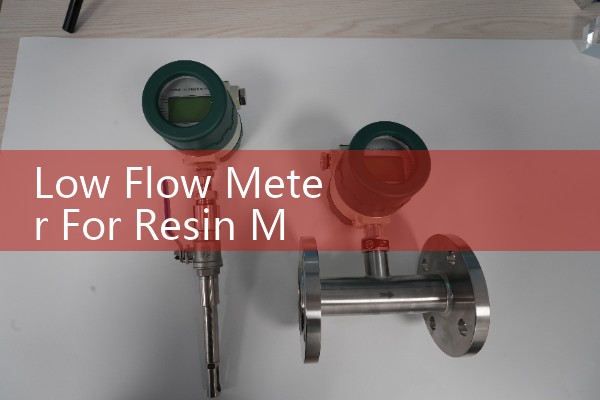
Low Flow Meter For Resin Ml/Min Two-Part Mixing Setups
Quick Answer: For accurate two-part resin mixing in ml/min, you need a low flow meter that handles viscous fluids and small flow rates. Silver Instruments supplies miniature oval gear flow meters and micro Coriolis mass flow meters for epoxy, polyurethane, and silicone dosing. These meters give you 4-20 mA HART output, measure from 0.6 ml/min, and work with viscosities up to 10,000 cP.
Why Flow Measurement Is Critical in Two-Part Resin Dosing
A two-part mixing system combines a resin and a hardener at a fixed ratio. If the ratio drifts, the final product fails. Most engineers set the pump speed and hope for the best. But pump output changes with temperature, back pressure, and wear. A low flow meter placed on each component line gives you real proof that the right amount is flowing. We have seen this on customer sites many times. A polyurethane foam manufacturer in Indonesia could not figure out why their panels had soft spots. They added OG-05 miniature oval gear meters on both the resin and isocyanate lines. The data showed the hardener flow had dropped by 8 percent during morning shifts because of higher fluid temperature. They fixed the ratio and saved two batches per week.
Miniature Oval Gear Flow Meters for Resin: OG-05 Series
Oval gear meters use two meshed rotors. Each pocket of liquid is known volume. This principle works very well for clean resins with viscosities from 1 to 10,000 cP. The Silver Instruments OG-05 measures flow rates from 0.6 to 60 ml/min with a repeatability of 0.1 percent. The meter body is SS316L. Wetted parts are also available in Hastelloy for aggressive hardeners. Process connections are 1/8 inch NPT female or M5 threaded. The meter comes with a PT100 temperature sensor option. You can read the temperature inside the resin line and compensate for viscosity changes. Output signals include pulse and 4-20 mA HART. The pulse output makes it easy to feed a batch controller or PLC. A paint manufacturer in Thailand uses OG-05 meters on each dosing head of their two-part automotive clear coat system. They track totalized volume per job and catch any clog before it ruins a spray cycle.
Here is the thing about oval gear meters. They need a clean fluid. Abrasive fillers such as silica or calcium carbonate will wear the gears over time. If your resin has fillers, install a 50-micron filter upstream. The pressure drop across the meter is low, typically less than 0.2 bar at 10 ml/min for a 500 cP fluid. You can operate the meter at line pressures up to 100 bar. The maximum fluid temperature is 80 degrees Celsius.
Micro Coriolis Mass Flow Meters for Two-Part Adhesives
When you need mass flow directly, forget about density or temperature corrections. A micro Coriolis meter such as the Silver Instruments CMF-DK series measures mass flow, density, and temperature in one device. This is ideal for two-part epoxy mixing where viscosity can change a lot during startup. The CMF-DK model can measure flow rates from 0.08 kg/h up to 20 kg/h. For a resin with density around 1.1 g/ml, that equals 1.2 ml/min to 300 ml/min. The accuracy is plus or minus 0.2 percent of rate. You get 4-20 mA HART outputs for mass flow and density. The meter also gives you a real density reading. You can use it to detect air bubbles or wrong resin batches. Last year a customer in South Africa asked us for a meter that could detect hardener ratio variations instantly. We supplied a CMF-DK meter with two-phase flow detection. It now alarms operators if the density strays more than 0.02 g/ml from the target. This stopped a recall of structural adhesive cartridges.
Coriolis meters have no moving parts in the flow path. So they handle abrasive fillers without wear. The pressure drop is higher than an oval gear meter. At 100 ml/min flow with a 500 cP fluid, the drop can be 1.5 bar. But for most
Key Specifications to Check for a Resin Low Flow Meter
Flow range in ml/min: Confirm the minimum and maximum flow you need. Most two-part dispensers run between 2 and 50 ml/min per stream. Viscosity range: Your resin may be 500 cP at room temperature but thicken to 5,000 cP in winter. The meter must handle this range. Output signal: For local display and batch control, pulse output is enough. For remote monitoring, 4-20 mA HART is the standard in chemical plants. Process connection: DN2, 1/8 inch NPT, or M5 fittings are common. Ask about thread type. Wetted materials: SS316L is fine for most resins. For isocyanates or aggressive hardeners, specify Hastelloy C-22 or PTFE seals. Temperature and pressure ratings: Our standard OG-05 works up to 80 degrees Celsius and 100 bar. The CMF-DK goes up to 80 degrees Celsius and 200 bar.
Real-World Installation Advice for Two-Part Mixing
Mount the flow meter close to the mixing head. This avoids lag time between the measurement and the actual mixing point. Use a small buffer of flexible hose after the meter to dampen pump pulsations. Pulsation from gear pumps can confuse the meter reading. Most engineers skip this part and then wonder why the reading jumps. A silicone damper or a small accumulator solves it. In practice, we recommend putting a check valve downstream of the meter. This prevents backflow when the dispensing valve closes. Backflow can cause measurement errors and air ingestion.
Because two-part systems often run intermittently, you should set the flow meter totalizer to count only when the line is active. Our meters have a digital input for external start/stop. Wire the dispensing signal to this input and the totalizer will only run during the shot.
FAQ on Low Flow Meters for Two-Part Resin Setups
What flow range is typical for two-part resin mixing? Most systems run between 1 and 100 ml/min per component. Our OG-05 oval gear meter covers 0.6 to 60 ml/min. The CMF-DK micro Coriolis meter covers about 1.2 to 300 ml/min for a 1.1 g/ml fluid.
Can these meters handle high viscosity resin like 10,000 cP? Yes. The OG-05 works well with viscosities from 1 to 10,000 cP. The Coriolis meter handles even higher viscosity, up to 50,000 cP, because it has no moving parts in the flow path.
Which output should I choose for a PLC or DCS? 4-20 mA HART is the most common in process plants. It gives you flow rate, and HART carries secondary variables like temperature or density. Some users prefer Modbus RTU for digital integration. We can supply either option.
Do you offer ATEX or Ex proof versions for solvent-based resins? Yes. Both the OG-05 and CMF-DK can be supplied with ATEX Zone 1 certification for gas and dust. Specify your hazardous area classification when you send an inquiry.
What is the typical lead time and price for a small lot purchase? We keep OG-05 meters in stock for flows up to 60 ml/min. Delivery is about 5 working days for standard versions. The CMF-DK is built to order, lead time 3 to 4 weeks. Price depends on options. Send us your flow range, pressure, temperature, and resin type, and we will quote within 24 hours.
Get a Quote from Silver Instruments
You can reach us at the contact form on our website or email our sales team. Tell us your pressure in bar, temperature in degrees Celsius, pipe size or connection type, flow range in ml/min, and the resin or hardener you use. We will recommend the best low flow meter for your two-part mixing setup and send a detailed price. We ship to Southeast Asia, Oceania, Latin America, Africa, and the Middle East every week.